27th Jul 2026
What size wing should you buy?
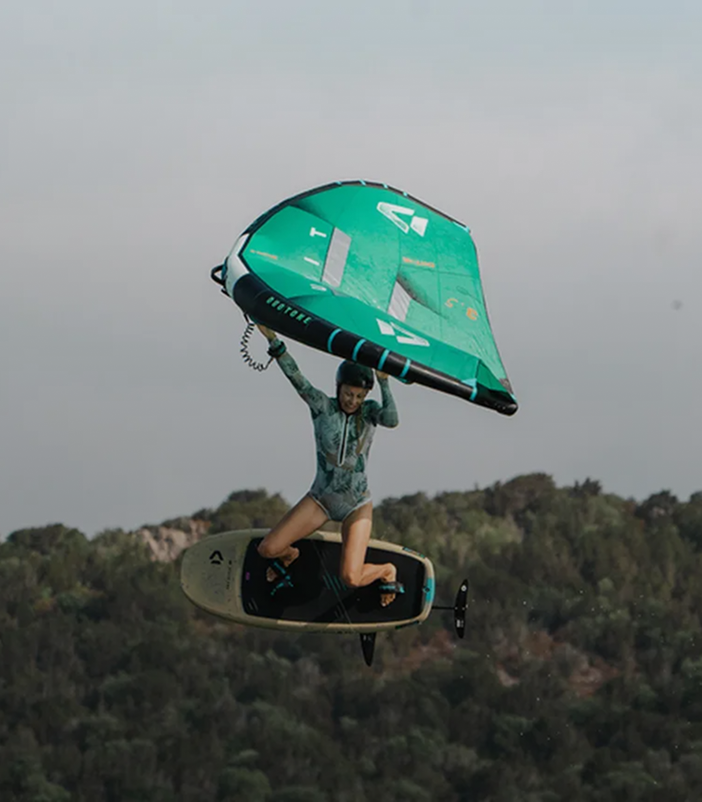

Forget the noise. Choose the right wing. Match your wing to your weight, local wind, and skill level, so you can ride more often, progress faster, and get more from every session.
O ne of the most common questions in wing foiling is also one of the easiest to get wrong: what size wing should I actually buy? There is plenty of advice online, but a lot of it lacks context.
One rider might tell you a 4m is perfect, another might swear by a 5m, and someone else might tell you to go even bigger. None of those answers are automatically wrong — but none of them mean much until you know who the advice is for, how much they weigh, what wind they normally ride in, and how experienced they are.
The good news is that wing sizing becomes much easier once you focus on the variables that actually matter. For most riders, the right decision comes down to body weight, your real-world wind range, and your current skill level.
If you want to browse current gear while you read, start with Wing foil gear, then look through Wings and parawings, Wingfoil boards and Foil kits.
What actually determines wing size?
Your weight
The baseline. Lighter riders need less area than heavier riders in the same wind, which is why one wing can feel lively for one person and underpowered for another.
Your usual wind
Size around the wind you ride most — not the strongest day you might see once a season. A wing that suits your normal conditions gets you on the water more often.
Your skill level
Beginners do better on a slightly larger wing — extra power makes it easier to get moving, stabilise, and build confidence. Smaller wings come once technique is in.
It is also worth clearing up one common misconception: most modern wing foil wings use inflatable leading edges and struts. The important decisions are not inflatable versus proper wing, but the right size, the right design, and the right handling feel for your riding.
Wing size by rider weight and wind
Use the table below as a practical starting point rather than a strict rule. The size that works best for you will still depend on the wing design, your board and foil setup, and the type of wind you usually ride in.
Rider weight × wind speed
Hover any cell to highlight. Sizes shown in square metres (m²).
| Your Weight | Light · 10–15 KN | Moderate · 15–20 KN | Strong · 20–30 KN |
|---|---|---|---|
| Under 65 kg Lightweights | 5.0 – 6.0 Forgiving low end | 4.0 – 5.0 All-rounder | 3.0 – 4.0 Easy in gusts |
| 65 – 75 kg Mid-light | 5.0 – 6.0 Forgiving low end | 4.0 – 5.0 All-rounder | 3.0 – 4.0 Easy in gusts |
| 75 – 85 kg Mid-heavy | 5.5 – 6.0 Strong pull | 4.0 – 5.5 Versatile | 3.0 – 4.5 Controlled |
| 85 – 95 kg Heavier | 6.0 – 7.0 Early lift | 5.0 – 6.0 Daily driver | 3.5 – 4.5 High wind |
| 95 kg + Heavyweights | 6.0 – 7.0 Maximum canopy | 5.0 – 6.0 Daily driver | 4.0 – 5.0 High wind |
Beginner tip: if you're still learning to get on foil consistently, stay toward the upper end of these ranges rather than the lower end. Extra canopy area is your friend while you build confidence.
What size should you buy first?
For many riders, the best first purchase sits in the 5m range. That size tends to cover a very useful middle ground for moderate conditions, which is why it is such a common starting point. Lighter riders may lean slightly smaller, while heavier riders or riders in lighter wind may want slightly more canopy area.
The key is not to treat one exact number as universal. The best first wing is the size that gives you the most usable range for the conditions you actually ride, not the size that sounds the most advanced.
The most common beginner mistake
The most common mistake beginners make is buying too small. Smaller wings are not automatically better; in fact, they usually demand cleaner technique, better pumping and better timing. If you are still learning, under-sizing your wing often just makes every session harder than it needs to be.
Your first wing does not need to be your forever wing. It simply needs to help you learn well, get on foil more consistently, and build confidence.
Match the wing with the right board and foil
Wing size matters, but your setup works as a system. Even the right wing can feel wrong if the board is too small or the foil is too technical for your level.
BoardIf you are learning, choose a board with enough stability and volume to make starts, recoveries and touchdowns less punishing. A dedicated wingfoil board will make the process far smoother than trying to force the wrong board to work.
A good category to start with is Wingfoil boards. If you want a concrete example, the North Seek Foilboard 2026 is positioned as an early-lifting freeride board with stability on take-offs and forgiving touchdowns.
FoilBeginners are usually better off shopping a complete foil setup rather than focusing on an individual front wing. A complete system removes guesswork and makes it easier to build a setup that works together from day one.
Start by looking at Foil kits. A strong reference point is the North Sonar Prime Edition, which is presented as an ideal starter kit for progressing across foil disciplines.
Which wings should you look at?
If you want an easy, dependable all-round option, look first at the North Nova. It is described as a balanced, easy-to-use all-round wing with a wide wind range and intuitive handling, which is exactly what many new and progressing riders want.
North Nova 2026 is a strong starting point if your priority is freeride progression and a versatile everyday wing. If you want a wing with broad appeal across freeride, freestyle and wave riding, the Duotone Unit is another strong option. It is positioned as a versatile wing with balanced performance across the wind range, which gives it useful crossover appeal as your riding develops.
Duotone Unit is well worth a look if you want one wing that can cover a lot of use cases. For riders looking for stability, smooth power delivery and efficient upwind performance, the Armstrong XPS is another option to consider. Its balanced design makes it suitable for everything from learning the basics to more performance-focused riding.
Armstrong A-Wing XPS MK II is a strong choice if you want a stable and efficient wing that can support your progression. The Ozone Flow is a versatile all-round freeride wing designed for riders of all levels. Its broad wind range, responsive control and easy handling make it particularly useful for beginners and progressing riders who want a dependable everyday wing.
Ozone Flow V2 Wing is worth considering if you want an accessible wing with plenty of room for progression.
Rent first, or buy straight away?
If you have never tried wing foiling before, renting first is a smart move. It lets you confirm that you enjoy the sport, get a feel for different gear, and make a more confident purchase decision once you know what suits you. NZ Boardstore also offers Wingfoil rental in Auckland, which makes trying before buying much easier if you are new to the sport.
If you would like some professional instruction before choosing your setup, you can also book a lesson with Pete at Auckland Windsurfing in Pt Chevalier.
Your First Setup Checklist
- Wing: Choose a practical all-round size based on your weight and the wind you ride most often.
- Board: Use a stable wingfoil board with enough volume for your skill level.
- Foil: Start with a complete foil kit or foil system rather than an isolated component.
- Impact protection: Add a proper impact or flotation vest for confidence and safety.
- Leash setup: Make sure your wing and board leash setup is sorted before you get on the water.
- Essentials: Check pumps, spare hardware and small accessories before your first sessions.
Helpful collections to browse next: Impact and flotation vests, Leashes and Wing and parawing accessories.
FAQ